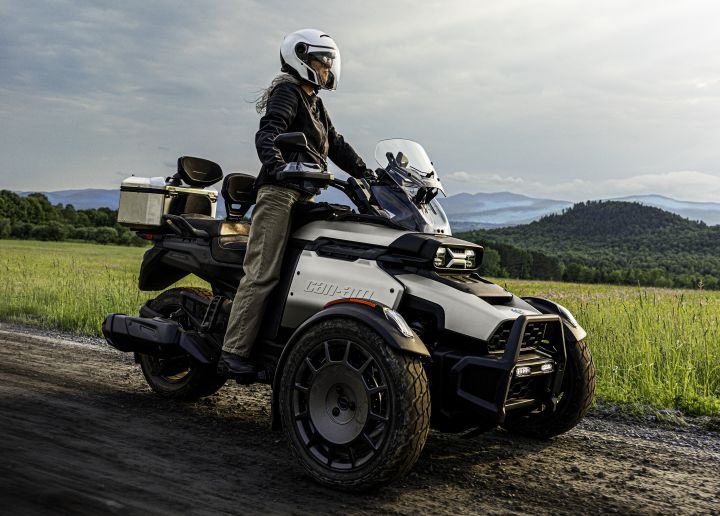
My spouse and I have years of experience on both the Can-Am Ryker, and the Can-Am Spyder RT. So I was thrilled at the opportunity to test the recently released Can-Am Canyon. This 3-wheeler has been designed to complete the Can-Am lineup as the ADV vehicle. This summer, I spent over 2 months riding the new Can-Am Canyon XT on a round the continent ride from my home in Arizona to two women’s events in the Eastern US and Canada and back.
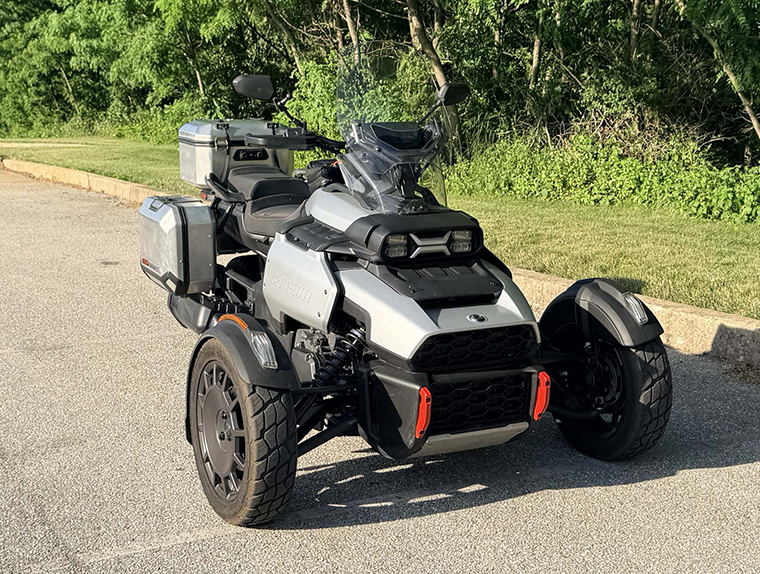
Meet the Can-Am Canyon: Adventure Machine
The Can-Am Canyon comes in three versions: Standard, XT, and Redrock. All three share a 115-horsepower Rotax ACE 1,330cc engine, along with an impressive range of features designed for adventure touring. These include ten inches of front suspension travel and more than nine inches in the rear.
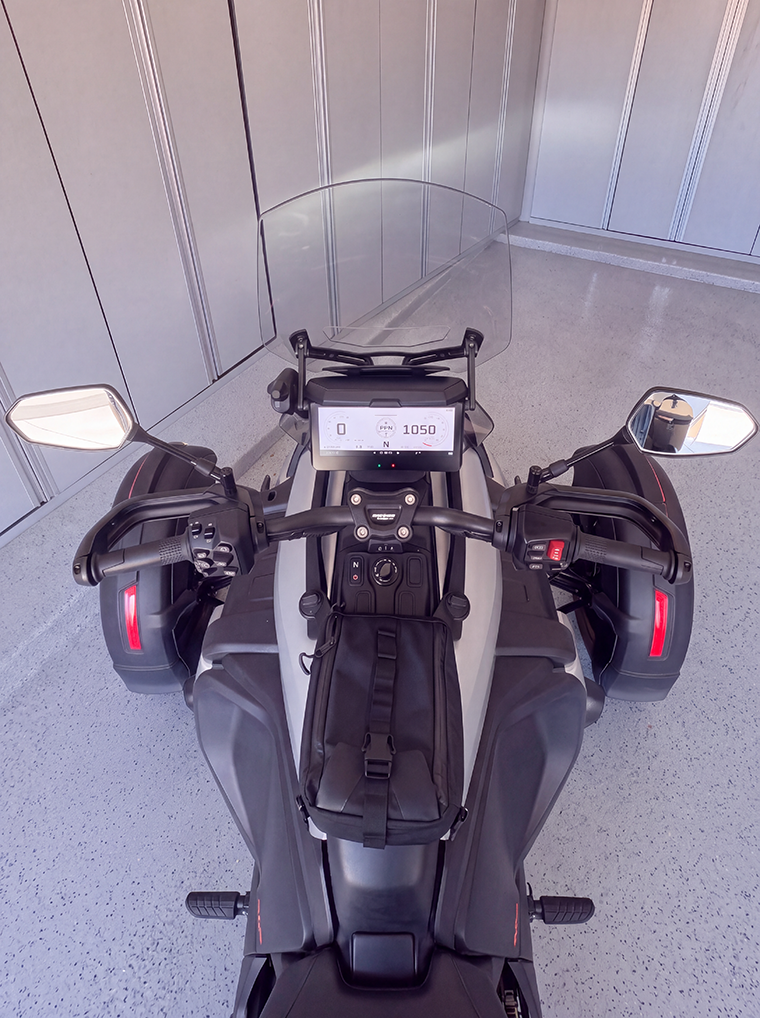
Enduro-style anti-slip footpegs, a model-exclusive handlebar riser make for better control while standing. While handguards, a durable radiator grille, belt-drive protection, rugged adventure wheels, provide true ADV protection. The new XPS Adventure tires provide good grip on the street and off the pavement, but I would like tire pressure sensors, especially if I am changing the pressure to meet varying conditions.
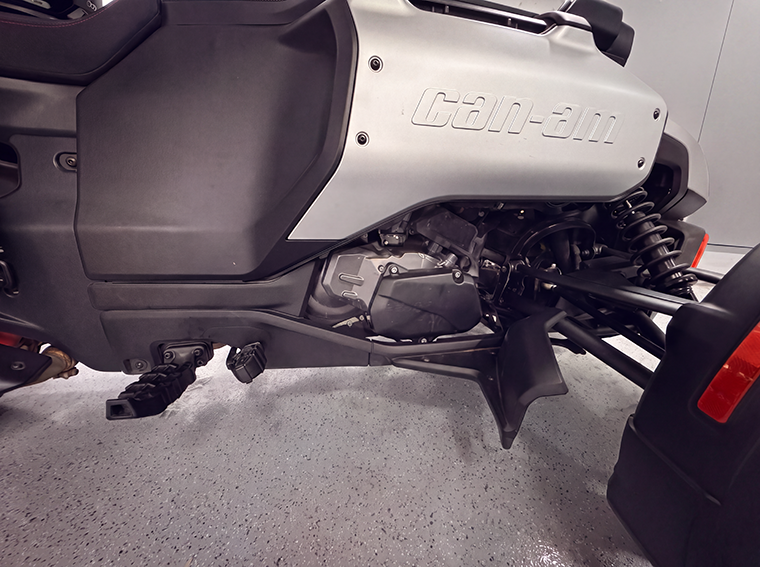
Other standard features include a manually adjustable windshield, LED lighting, and a 10.25-inch touchscreen display with Apple CarPlay. Four riding modes—Sport, All-Road, Rally, and Normal—adjust the engine, stability control, and power steering to suit different riding conditions. The Canyon also features advanced electronics, including stability control, traction control, dynamic power steering, and hill-hold control. For customization, there are 20 LinQ attachment points and 25 dedicated Can-Am Canyon accessories, along with a stated combined carrying and/or towing capability of up to 400 pounds.
It's an impressive package on paper. And after riding almost 10,000 miles over six weeks, I can say the Canyon is much more than a collection of features. It's a genuinely fun motorcycle that allows riders to continue enjoying adventure touring beyond what might be possible for them on two wheels.
Long-Distance Comfort and Handling
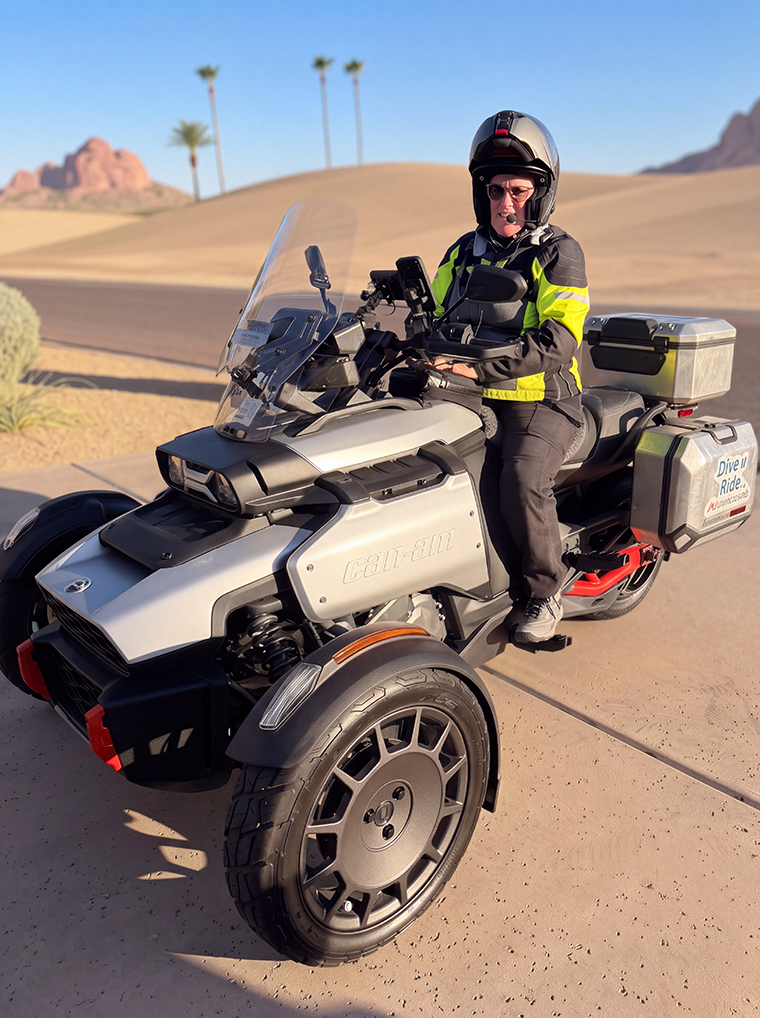
The Can-Am Canyon proved capable of handling comfortable eight- to ten-hour riding days, even when repeated over a ten-day stretch. It has plenty of power for highway cruising, and cruise control makes long stretches more enjoyable. It handles winding back roads with confidence and transitions easily onto dirt and gravel. That versatility is one of its greatest strengths.
Riding a three-wheeled machine with two front wheels and one rear wheel requires a different set of skills than riding a traditional motorcycle. You don't lean into corners in the same way, and steering requires shoulder and upper-arm strength. I advise riders to strengthen the upper body, or you'll be sore after a long day of twisty roads. There are techniques for navigating curves smoothly and efficiently, and I found myself handling hairpins and decreasing-radius turns with ease. Still, I recommend training—or at least talking with an experienced three-wheeled rider—before tackling challenging mountainous roads.
Ergonomics, Wind Protection, and Suspension
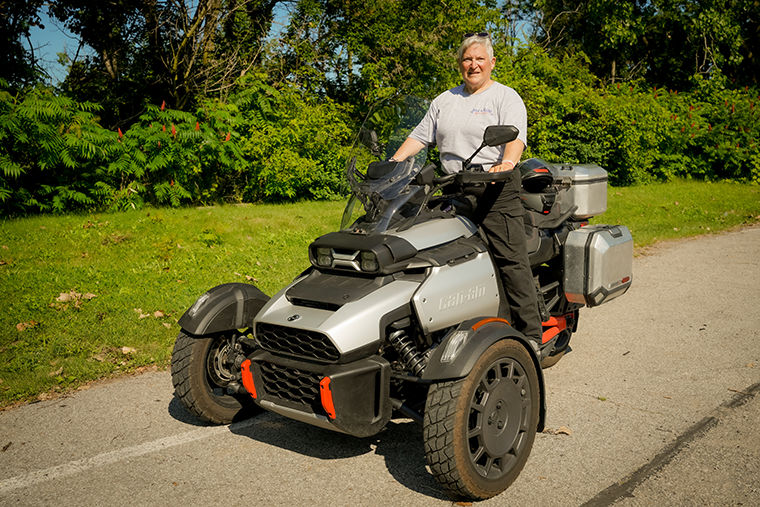
The Can-Am Canyon's ergonomics are similar to those of a standard upright motorcycle. At 5 feet 4 inches tall, I found the bike fit me well. Some taller riders report finding the seating position cramped, and the available accessory handlebar risers offer a height adjustment.
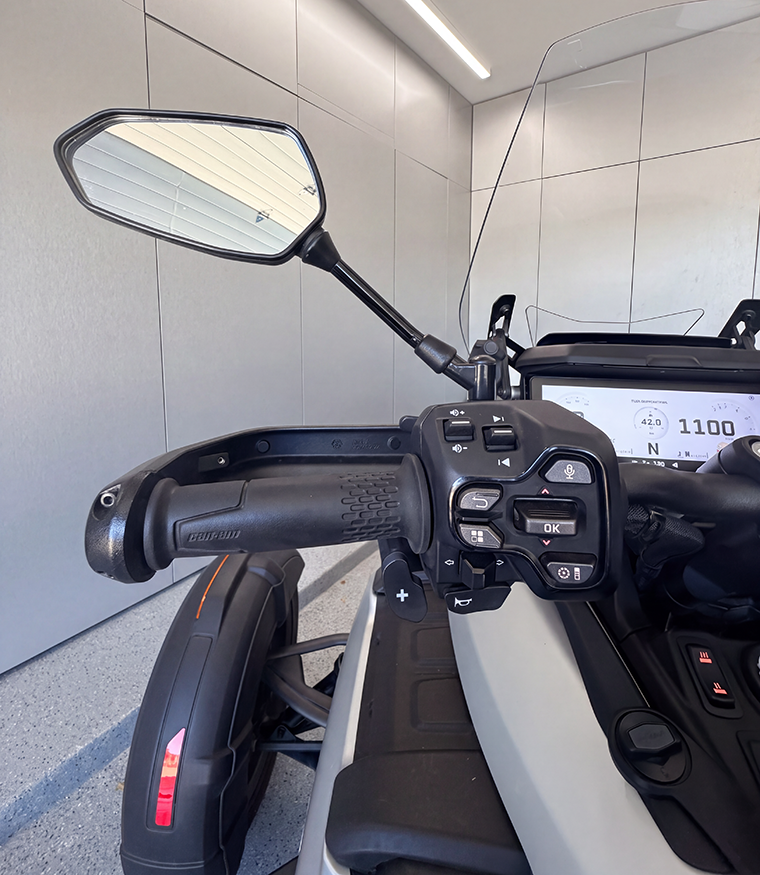
There are no clutch or front-brake hand levers to adjust because the Can-Am Canyon uses a semi-automatic transmission operated by a left-hand up-and-down gear selector. And, like other Can-Am three-wheelers, it has reverse gear. Believe me, you need it! At a stated dry weight of 1,036 pounds, this isn't a machine you want to push backward using leg power alone.
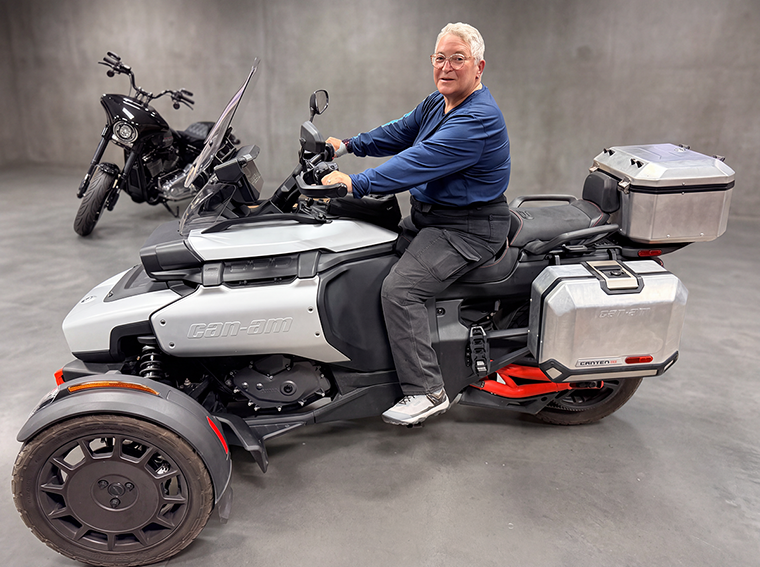
The manually adjustable windshield worked well in different riding conditions, and I appreciated being able to change its position as needed. I would prefer more protection from wind noise at highway speeds.
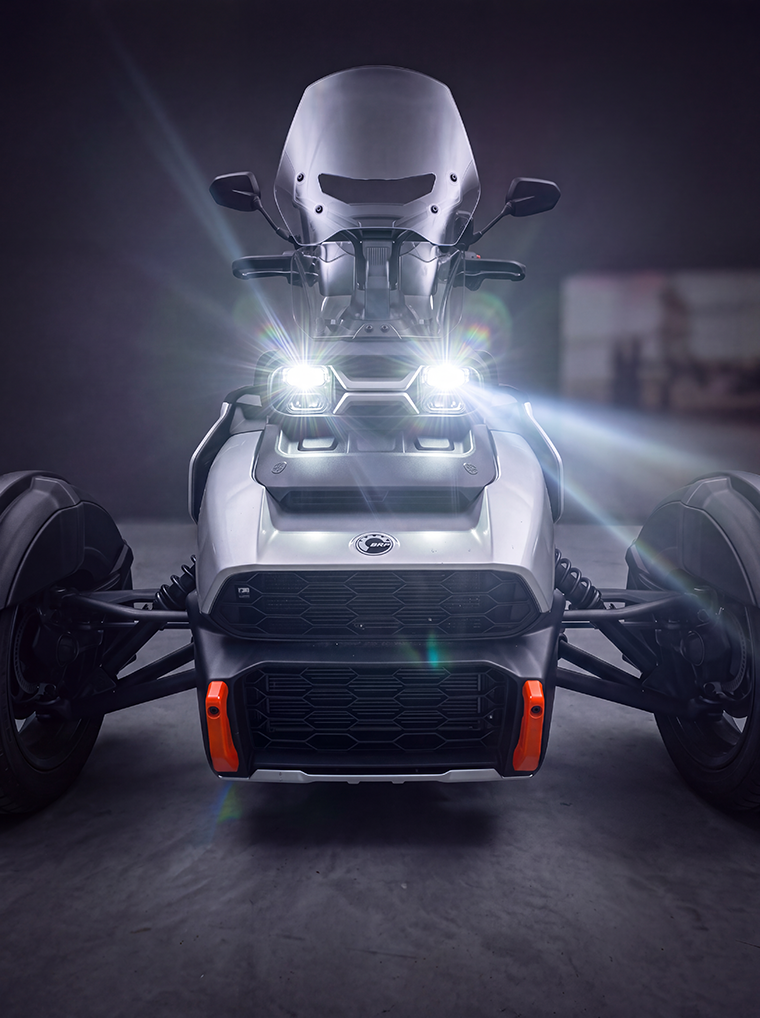
The Canyon XT comes with a SACHS rear shock featuring self-leveling air preload adjustment. I have experience with electronic suspension adjustment on BMW motorcycles, and found the XT's suspension more than sufficient for comfortable riding both on and off pavement. The Redrock model adds an upgraded suspension system, although I didn't find myself missing it during my XT ride.
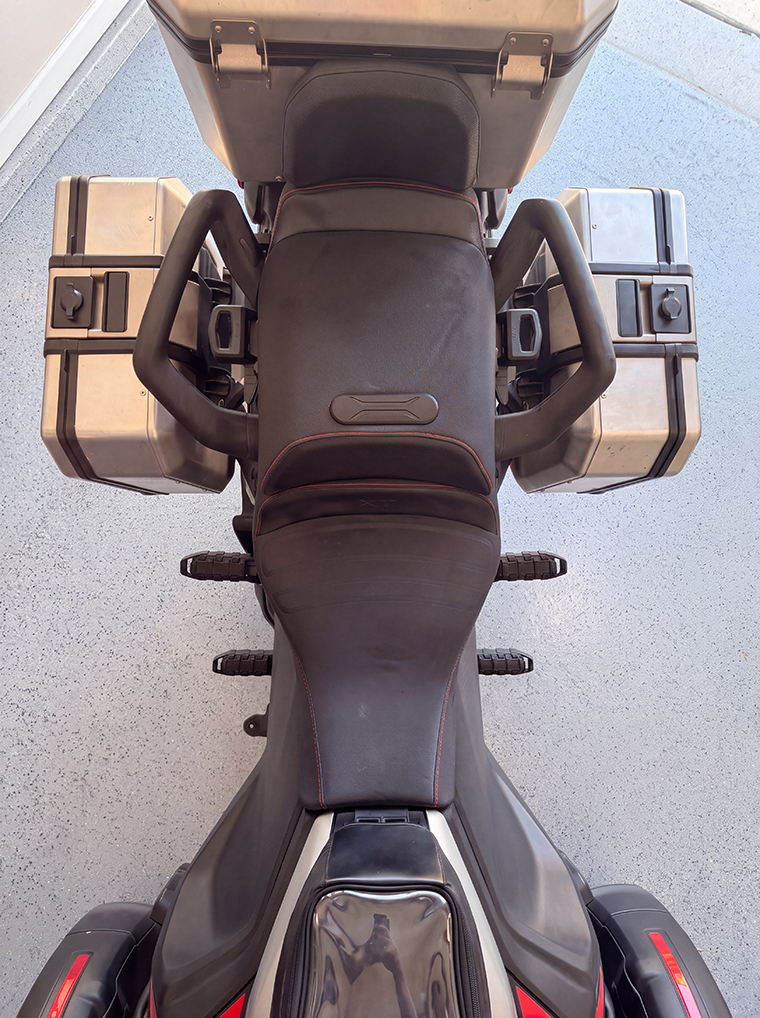
One interesting feature involves the passenger footpegs. When the right passenger footpeg is lowered, a magnetic switch tells the suspension system to adjust its calibration for two-up riding. If you're riding solo, keep the passenger footpegs folded up so the system doesn't make that adjustment.
Adventure Touring Luggage
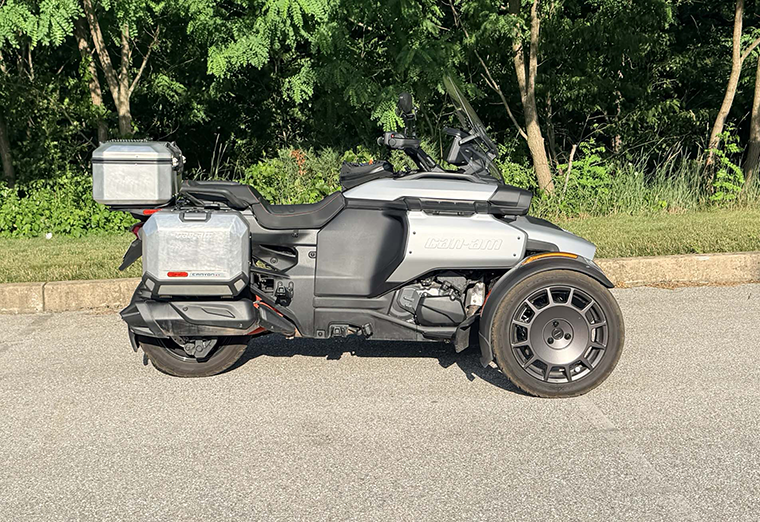
Both the Can-Am Canyon XT and Redrock come standard with removable side cases and a top case. The cases are large, boxy, and well suited to adventure touring, providing enough capacity for my five-week trip. Each case has a rubber gasket between its lid and body, intended to keep water out.
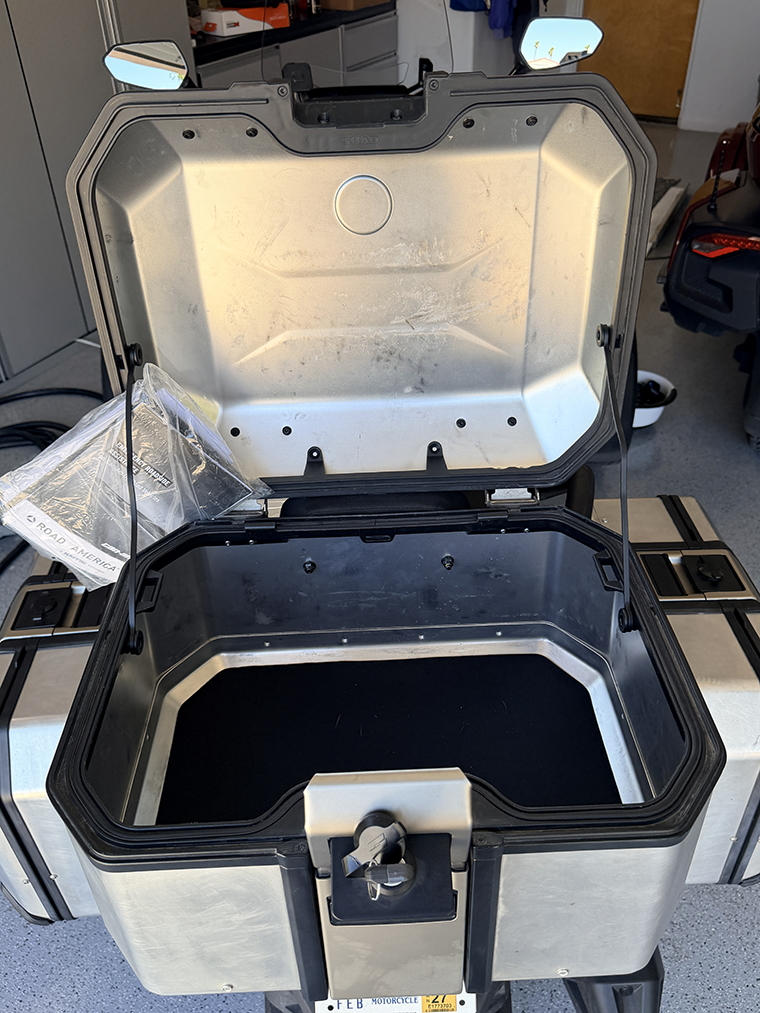
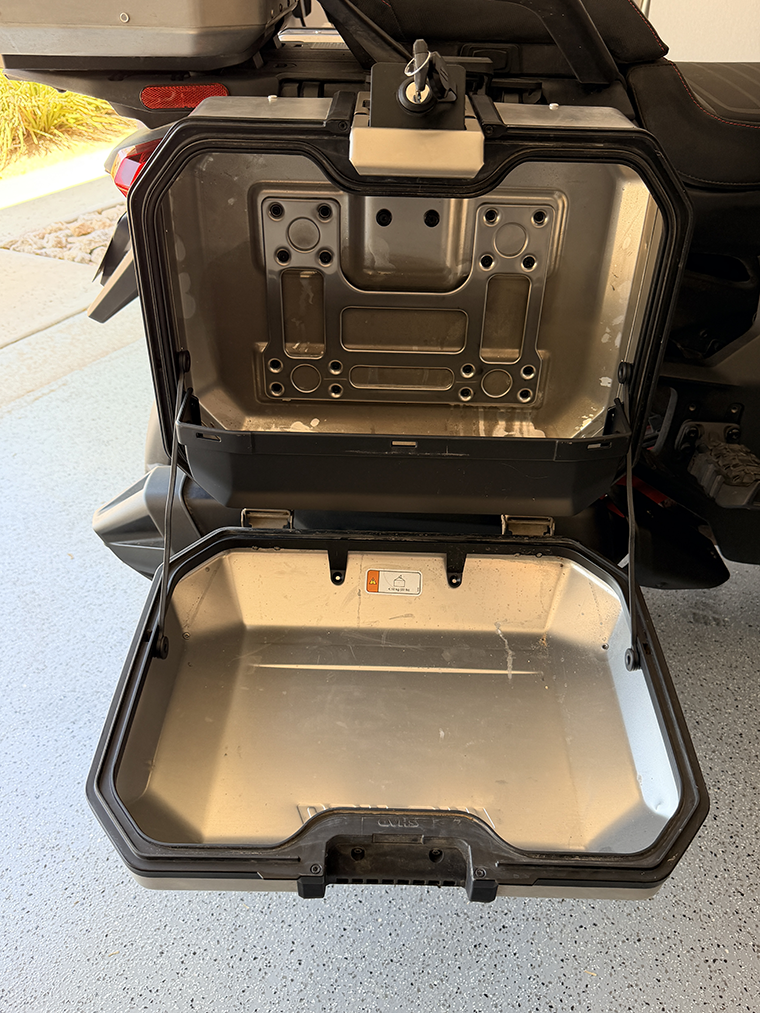
Unfortunately, one of my XT's side cases leaked consistently, and I was grateful I'd packed my gear inside waterproof liners. Can-Am has acknowledged a watertightness issue with Canyon saddlebags, and a warranty fix is available. I also found the side cases inconvenient in wet weather. They open in a clamshell design, with the hinge at the bottom, which means water can easily drip inside when you open a case in the rain.
Touchscreen, Apple CarPlay, and Navigation
The Can-Am Canyon and other Spyders from 2025 onward feature a 10.25-inch touchscreen display with Apple CarPlay. The impressive display offers plenty of functionality, but my experience with the technology was less satisfying. Can-Am encourages riders to use its BRP GO! app for navigation and connectivity. Riders who rely on older GPS devices for coverage in remote areas will want a secondary system.
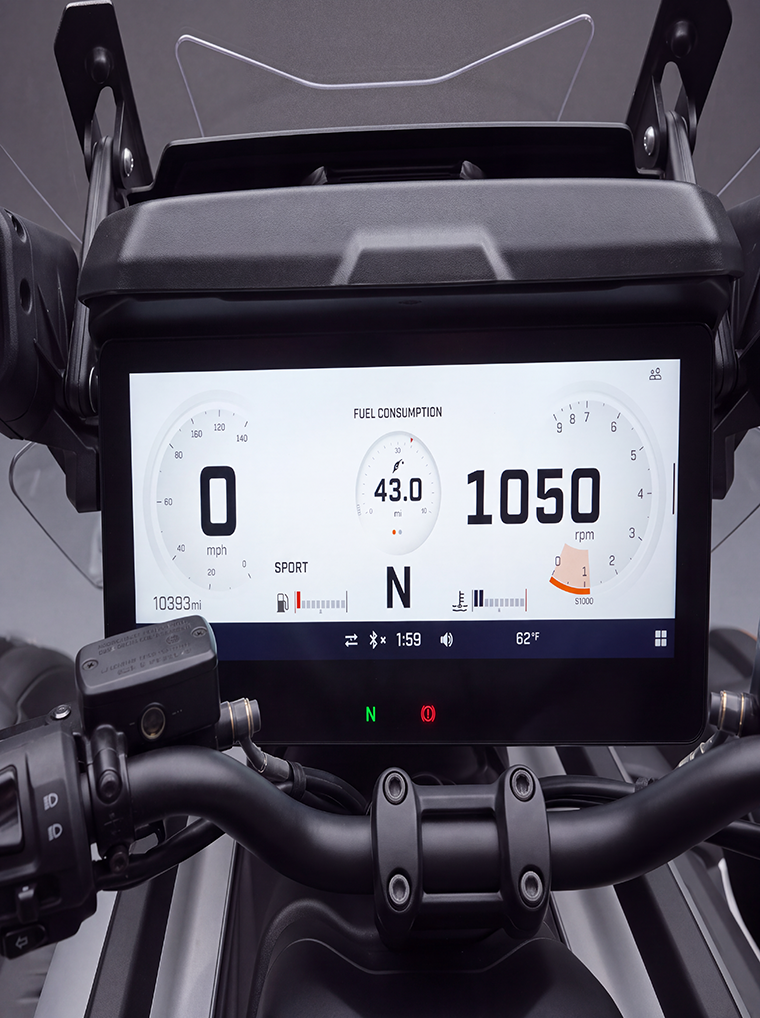
The Apple CarPlay required both a phone and Bluetooth headset to be paired with the Canyon. Sometimes the pairing process worked; other times it didn't. Even when the system connected successfully, CarPlay occasionally dropped out during rides. I'd installed the latest available BRP firmware before my trip, but the problems persisted even with the newest iPhone. I continued using my Garmin for remote adventure travel reliability.
For safety, the touchscreen is disabled while the bike is moving, although a joystick allows access to certain functions.
Off-Road Adventure: Putting the Canyon to the Test
On my final day with the Can-Am Canyon XT, I decided to give it one more adventure. I took a 183-mile ride through Arizona's Superstition Mountains, traveling through Tortilla Flat toward Roosevelt Lake. The route includes steep mountain roads, tight curves, and a long stretch of dirt. It had been more than ten years since I'd last ridden this route on my 2014 BMW R1200GS, and I was eager to see how the Canyon would perform.
It exceeded my expectations. The Canyon handled the tight curves confidently and moved easily through sandy turns. In All-Road mode, the traction control intervened more conservatively, as expected.
Rally mode was a blast! In Rally mode, I could allow the rear tire to spin and slide, making it possible to drift through loose surfaces. The Canyon proved to be a surprisingly capable off-road machine, especially on dirt roads and terrain that doesn't require exceptional ground clearance. I wouldn't choose it for deeply rutted trails or extreme obstacles, but for gravel roads, dirt tracks, and adventure routes with reasonable clearance requirements, it's an exciting option.
Looking Ahead: 2027 Can-Am Updates
I was invited to attend the BRP Can-Am dealer Club BRP 2027 event, where the company introduced products for the upcoming model year. The Spyder lineup receives new colors and relatively limited feature changes. The Can-Am Canyon Redrock's color changes to Sandstone, a name I think fits its adventure-oriented personality.
The company also announced technology updates intended to improve the touchscreen experience, including support for Android phones and the ability to use certain functions without pairing a Bluetooth headset. Tire pressure monitoring is also being introduced on the Spyder RT Sea-to-Sky, although not across the entire three-wheel lineup.
Another encouraging development is BRP's growing emphasis on rider community. Its Women of On-Road Facebook group and newer Three-Wheel Collective initiative are designed to bring riders together. According to data shared by BRP, women account for 30% of new three-wheel vehicle sales. Along with the BRP Experiences program, these initiatives are helping introduce more people to the possibilities of three-wheel riding.
I enjoyed the Can-Am Canyon XT so much that I requested a Canyon Redrock from a tour operator I work with for a 21-day tour I was leading in Scotland. That gave me additional time to evaluate whether the Redrock's premium features justified its higher price. For riders who plan to use the Canyon primarily for occasional touring or paved-road adventures, the XT offers an excellent combination of comfort and capability. But if you're serious about adventure touring and plan to ride frequently, the Redrock deserves consideration. Its upgraded suspension, backup camera, and customizable ride mode add meaningful functionality, and after spending substantial time with both versions, I believe those features can justify the additional cost for riders who intend to take full advantage of the Canyon's adventure capabilities.
Can Three Wheels Keep the Adventure Going?
The Can-Am Canyon XT brings adventure touring to riders who may have felt left out of the off-pavement experience. I've spent years exploring paved and unpaved roads on two wheels, and appreciate the adventure provided by the Can-Am Canyon. It is a different experience, one with the added stability of three wheels and more fun than I expected. In fact, I'm already thinking about bigger and international off-road adventures with this machine.
Want to join me?
Specs At A Glance: 2025/2026 Can-Am Canyon
Engine Size: 1330 cc
Seat Height: 33.2 in
Fuel Capacity: 7.1 gallons
Dry Weight: 1036 lb
Color Options:
- Standard and XT: Sterling Silver Satin
- Redrock: Moss Green Satin (with orange accents)
MSRP: Canyon, $25,999; Canyon XT, $29,999; Canyon Redrock, $32,499